
Engineered for hygiene: The Sirius cooling tunnel advantage
- Introduction: Why hygienic design is no longer optional
- 1. Designed for maximum accessibility
- 2. Tool-free maintenance with quick release mechanisms
- 3. Hermetically welded stainless steel construction
- 4. Removable cooling plates and filters
- 5. Sealed gaskets with no bacterial traps
- 6. Integrated condensate management
- 7. Built-in service logic: From handles to sensor placement
- Summary: Built clean. Works clean. Stays clean.
Introduction: Why hygienic design is no longer optional
In today’s food and confectionery industry, hygiene is not a competitive edge, it’s a requirement. Stringent food safety regulations, rising customer expectations, and the high cost of product recalls have placed a spotlight on equipment design like never before. Cooling tunnels, operating in the most critical stages of production, are under particular scrutiny.
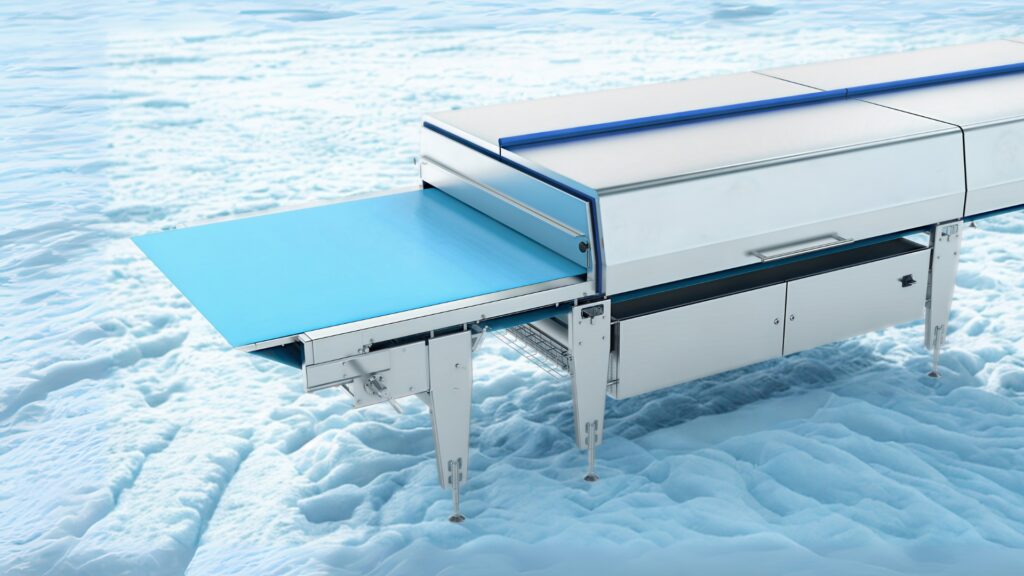
This is why Aasted developed the Sirius Cooling Tunnel, a tunnel engineered from the ground up to deliver uncompromising hygiene, operational efficiency, and long-term reliability. Built in stainless steel, with no adhesives, no hidden crevices, and no unnecessary complexity, Sirius redefines what “cleanable” means in cooling equipment.
1. Designed for maximum accessibility
A key factor in hygienic design is access. Without it, even the most advanced tunnel becomes a liability.
Ground clearance and access underneath the tunnel
The Sirius Cooling Tunnel is designed with 400 mm ground clearance, allowing cleaning staff full access beneath the tunnel. Unlike other models where the underside becomes a blind spot for sanitation teams, Sirius ensures no area is left untouched.
Internal access to key components
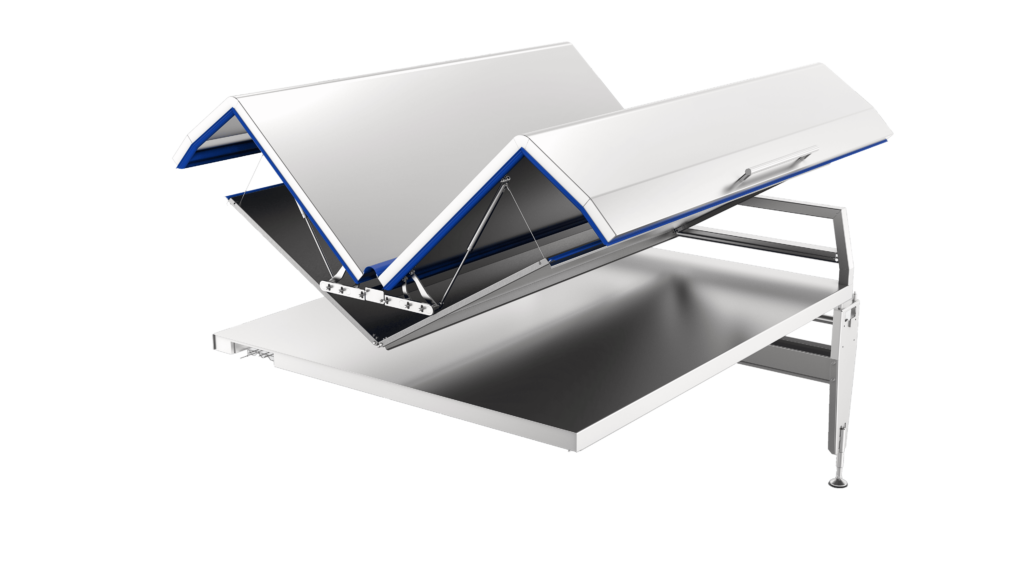
Inside the tunnel, all key components, including cooling plates, filters, rollers, and scrapers, are accessible and removable. No proprietary tools. No lengthy disassembly. Just fast, intuitive access that minimizes downtime and maximizes hygiene compliance.
2. Tool-free maintenance with quick release mechanisms
Routine maintenance and cleaning can be a production bottleneck, unless the machine is designed to make them fast and easy.
Time-saving advantages
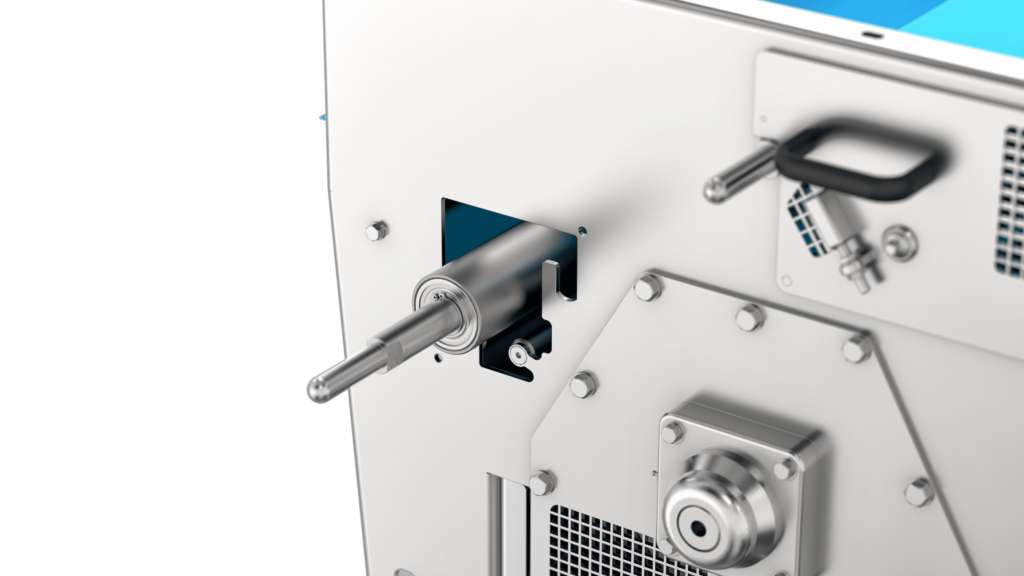
Sirius is equipped with tool-free quick release systems for all rollers and scrapers. Operators can safely and quickly remove components without needing special training or equipment. This not only reduces service time, but also encourages regular cleaning, boosting hygiene on a daily basis.
Compared to competitor designs that rely on screws, bolts, or clamped components, the Sirius tunnel minimizes friction and frustration in maintenance.
3. Hermetically welded stainless steel construction
No adhesives, no weak points
Where many manufacturers opt for cost-cutting solutions like adhesive bonding or plastic fittings, Aasted makes a deliberate choice: fully welded stainless steel throughout the tunnel frame and contact zones.
This matters.
Why? Because glued joints and hollow plastic parts are breeding grounds for bacterial buildup. They’re difficult to inspect, harder to clean, and can degrade over time. Sirius eliminates those weak points entirely with a design that is hermetically sealed, robust, and built to last.
There are no hollow handles, no open gaskets, and no laminated panels, every detail is engineered to withstand washdown conditions without compromise. Durable and audit-proof by design.
4. Removable cooling plates and filters
Cooling components are one of the most common sources of hidden contamination in Sirius tackles this by ensuring both filters and cooling plates are fully removable, giving cleaning staff access to all surfaces. These components are not embedded or fixed inside boxed sections but designed to be pulled, cleaned, and reinserted with minimal effort.
This feature dramatically reduces the risk of hidden contamination, such as mold, dust, or sugar buildup, and supports better long-term temperature control and energy efficiency.
5. Sealed gaskets with no bacterial traps
Another design feature often overlooked in competitive tunnels is gasket engineering. In many models, gaskets are glued into place, with hollow interiors or dead-end grooves where moisture and debris accumulate, making them nearly impossible to sanitize completely.
Detachable solid gaskets with no voids
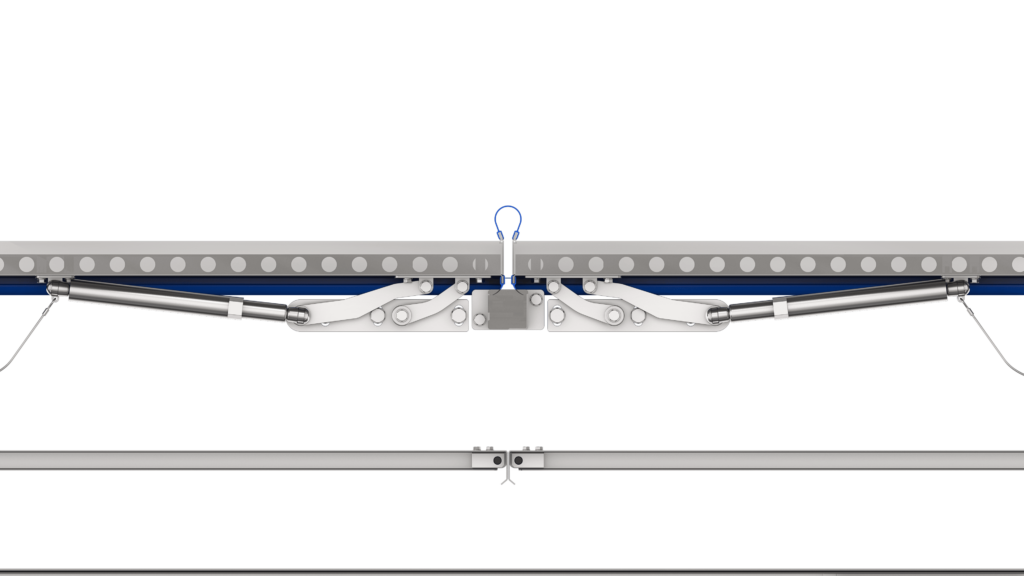
The Sirius Cooling Tunnel uses fully detachable, solid-surface gaskets, designed without any internal cavities or hidden contact points. This seemingly minor feature translates to a major win in hygienic safety, especially in high-humidity zones where bacterial growth can go unnoticed.
6. Integrated condensate management
Cooling environments naturally produce condensate, and if mismanaged, it becomes a hotspot for microbial risk.
No pooling, dripping, or bacteria buildup
Sirius incorporates a dedicated condensate collection and drainage system that prevents moisture from pooling, dripping, or coming into contact with product zones. Instead of relying on makeshift trays or external fittings, the condensate system is integrated directly into the machine architecture.
This ensures compliance with global food safety standards and supports HACCP planning without the need for constant workaround solutions.
7. Built-in service logic: From handles to sensor placement
Every aspect of Sirius reflects a service-first mindset.
- All handles are made from solid stainless steel, not plastic, ensuring no degradation or micro-tears over time.
- Belt tracking sensors are fully integrated and protected, not mounted on exposed towers, which are vulnerable to damage or misalignment.
- Service carts and guided maintenance workflows make the entire process efficient, intuitive, and consistent.
It’s not just a tunnel. It’s a hygiene-optimized platform that reduces risk, simplifies operation, and enhances product integrity.
Summary: Built clean. Works clean. Stays clean.
The Sirius Cooling Tunnel by Aasted is more than a machine, it’s a declaration of how seriously we take hygiene in modern confectionery manufacturing.
- 100% stainless steel
- Fully welded and hermetically sealed
- Tool-free quick release access
- Integrated, removable cooling and filtration components
- Hygienic gasket design with no hidden traps
- Ground clearance and under-access for full sanitation
- Thoughtful, service-friendly architecture
Whether you’re upgrading an old line or designing a new facility, Sirius offers future-proof performance with built-in food safety.
Want to see Sirius in action?
Book a demo or speak with one of our engineers to see how Sirius can improve hygiene, reduce cleaning time, and future-proof your cooling line.